Date: January 2026
Location: China
Overview
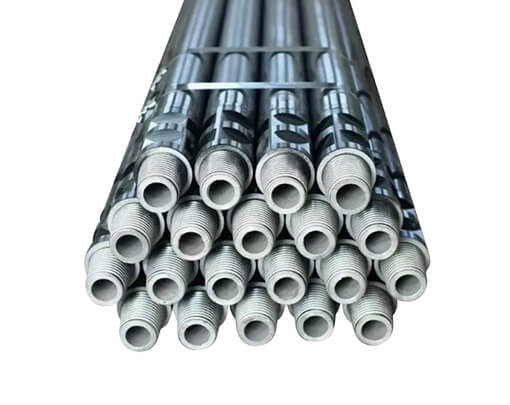
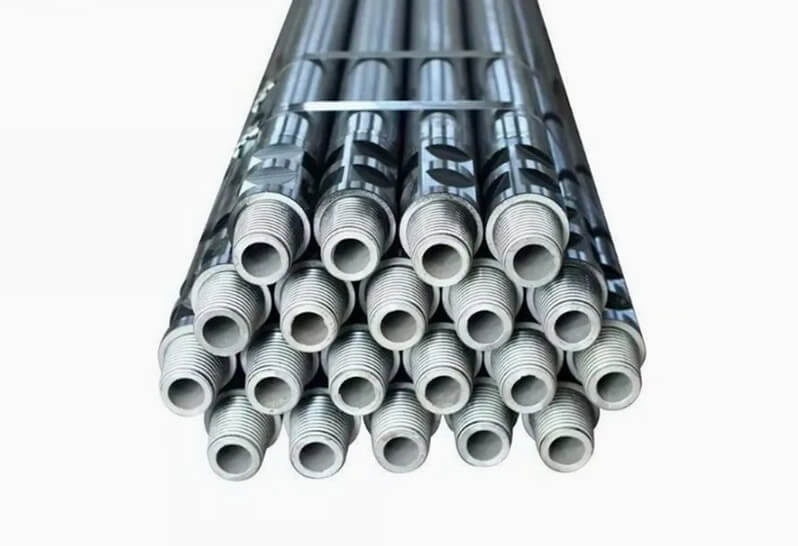
Water well drill pipes are core tools widely used in geological exploration, water conservancy projects, and coal mining. The rationality of thread design directly affects drilling efficiency, connection stability, and equipment service life. Taking the Jinghe 89 mm outer diameter water well drill pipe as an example, its thread type must be customized according to drilling scenarios, geological conditions, and equipment matching requirements.
From the perspectives of technical standards, application scenarios, and manufacturing characteristics, this article systematically analyzes the thread types applicable to 89 mm water well drill pipes.
I. API Standard Threads: An Internationally Universal Basic Option
API (American Petroleum Institute) standard threads are globally recognized specifications for drill pipe thread design. Their key advantages lie in a high degree of standardization and strong interchangeability. For 89 mm drill pipes, API standards provide two main thread solutions:
1. NC Series Threads
Such as NC38 and NC40, which adopt a 1:6 taper design, with 4–5 threads per inch and a V-shaped thread profile. The tapered structure enables self-locking connections.
These threads are suitable for medium-depth drilling applications such as coal mine gas drainage and geological exploration. Their tensile strength can exceed 500 tons, allowing them to withstand the self-weight of the drill string and axial loads generated during drilling.
2. Numbered Tool Joint Threads
Examples include NC26 and NC31, featuring an improved V-shaped thread profile. By optimizing the crest and root radii, stress concentration is reduced.
Such threads are commonly used for connections between drill pipes and drill collars or tool joints. For example, transition joints connecting an 89 mm drill pipe with a 95 mm drill collar can effectively disperse impact loads during drilling operations.
The standardized manufacturing process for API threads includes heat treatment, thread machining, and surface hardening, ensuring thread accuracy reaches ISO Grade 9 or above and meets coaxiality requirements for deep-hole drilling.
II. Special Geological Threads: Customized Solutions for Complex Formations
For special geological conditions such as soft coal seams and fractured rock formations, 89 mm water well drill pipes require impact-resistant and anti-galling thread designs:
1. Rectangular Threads
Rectangular threads adopt a large pitch design (3–4 threads per inch) with a wide tooth profile. By increasing the thread contact area, shear resistance is significantly improved.
For example, in coal mine deep-hole water exploration using 89 mm rectangular-thread drill pipes, no thread breakage or slippage occurred at a drilling depth of 300 meters. Compared with traditional V-shaped threads, service life was increased by three times.
2. Trapezoidal Threads
Trapezoidal threads feature an isosceles trapezoidal profile with 30° flank angles. A 0.2–0.5 mm fitting clearance is reserved to reduce friction during drilling.
These threads are suitable for high-speed drilling scenarios such as coal mine gas extraction boreholes, helping reduce drill pipe temperature rise and extend equipment service life.
3. Double-Shoulder Threads
Double-shoulder threads add a second shoulder structure to conventional threads, providing dual sealing and enhanced leakage resistance.
For example, in water conservancy projects, 89 mm double-shoulder thread drill pipes reduced mud leakage by 80% compared with single-shoulder threads when drilling in sandy formations, effectively protecting drill bits and the inner walls of drill pipes.
III. Performance Optimization of 89 mm Drill Pipe Threads Through Manufacturing Process Upgrades
The performance improvement of 89 mm water well drill pipe threads relies on advanced manufacturing technologies:
1. Friction Welding Technology
Through high-pressure forming and vacuum quenching and tempering, stress concentration at thread roots is eliminated. Drill pipes manufactured using friction welding technology achieve a fatigue life exceeding 100,000 cycles, which is five times higher than that of traditional welding processes.
2. Automated Machining Equipment
CNC machining is used for thread processing, ensuring that deviations in thread pitch, taper, and tooth profile accuracy are controlled within ±0.05 mm for each drill pipe.
3. Surface Hardening Treatment
Carburizing and quenching processes increase thread surface hardness to above HRC 50, significantly enhancing wear resistance. Field data from oilfields show that surface-hardened 89 mm drill pipes experience 70% less thread wear than untreated drill pipes when drilling in gravel-bearing formations.
Conclusion
The thread design of Jinghe 89 mm water well drill pipes must balance both standardization and customization. API standard threads meet basic connection requirements, special geological threads address complex formation challenges, coal mining–specific thread designs ensure operational safety, and advanced manufacturing processes enhance overall product performance.
In the future, as drilling technology advances toward greater depth, intelligence, and efficiency, the thread design of Jinghe 89 mm water well drill pipes will increasingly emphasize lightweight construction, high strength, and environmental sustainability, providing more reliable equipment support for geological exploration, water resource development, and energy exploitation.
WeChat/WhatsApp: 0086 19837103511
Email: jhzc@kdrill.com